Dog Sometimes Walks Funny With His Tail to the Side
People have been trying to figure out what dogs are trying to tell them for centuries. Body language can say a lot about a dog's mood, just like a human's. Check out what your dog — or someone else's — is trying to communicate to you through his or her tail. You might be surprised about what he or she is really saying.
1. Why dog tails are important
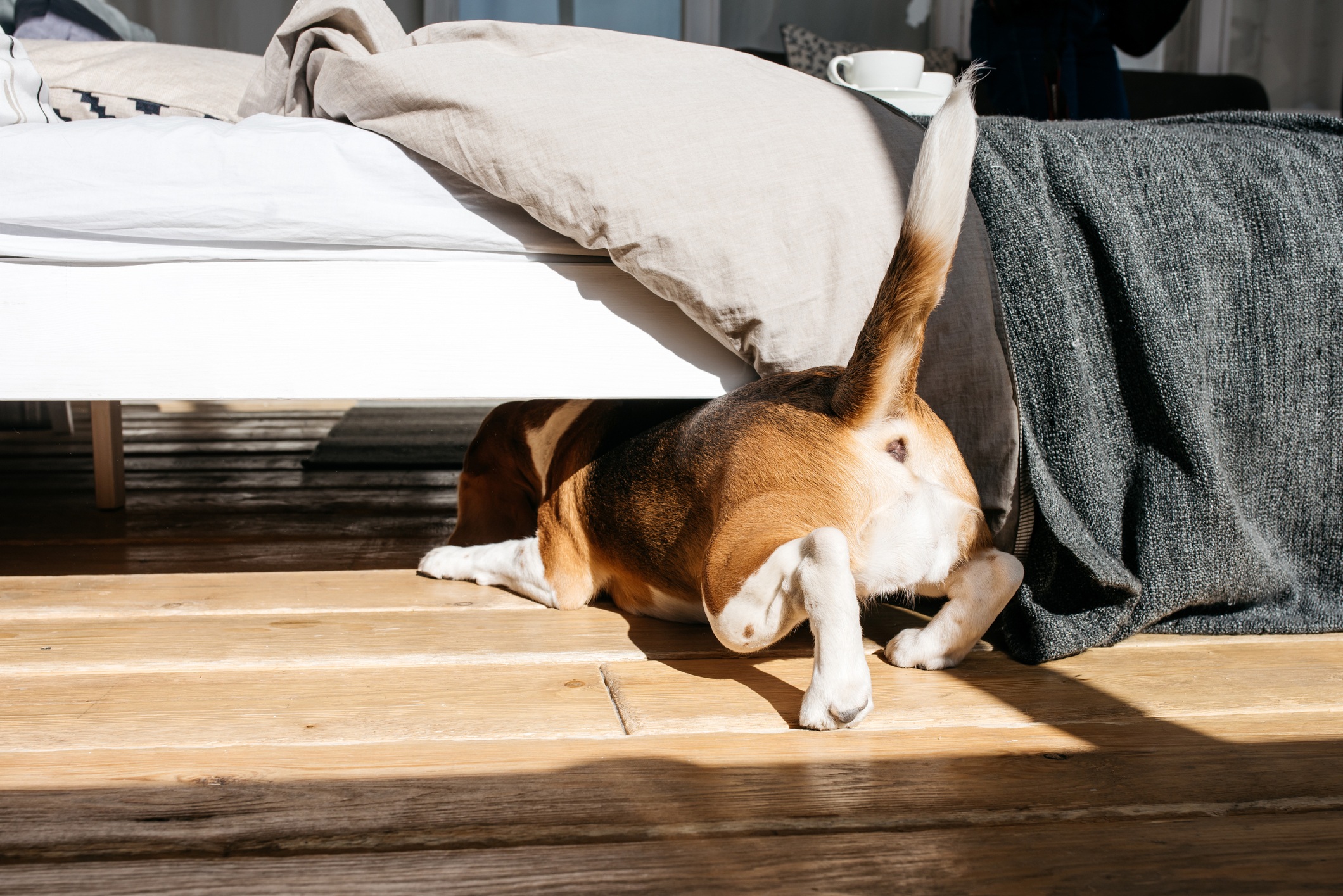
The beagle dog crawls under the bed | Kostyazar/IStock/Getty Images
When Dr. Lisa Radosta, owner of Florida Veterinary Behavior Service, talked to petMD, she talked tails. Dog tails, that is.
"The tail serves lots of functions, such as acting as a rudder in the water when the dog is swimming and acting for balance when a dog is running. If you watch a dog take a tight turn at high speed, you will likely see him use his tail for stability," said Radosta. In addition, a dog uses his tail to communicate, along with facial expressions and body postures.
Next: Poor doggy
2. Tucked in
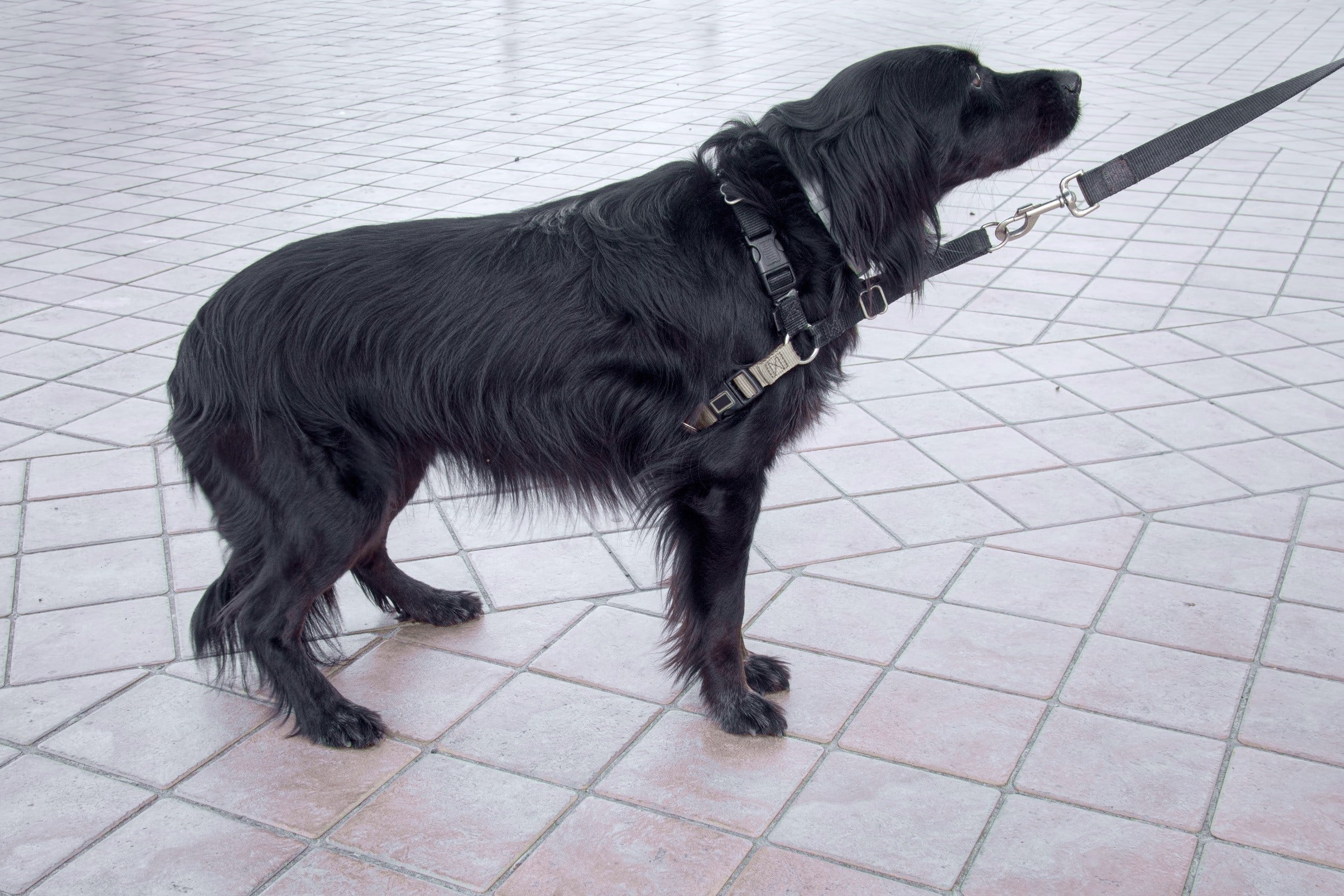
Scared dog with tail between legs | Goldfinch4ever/iStock/Getty Images
If you see your dog's tail tucked between his legs — note that this position is a bit different from him just pulling his tail down — he could be afraid, according to Reader's Digest.
"This can mean a dog is feeling threatened or is fearful of the situation he's in. A tail tucked between the legs covers a dog's genital area for protection," said Erin Askeland, CBCC-KA, CPDT-KA of Camp Bow Wow. In other words, take care if you see your dog in this posture.
Next: This could mean a couple things.
3. Curled toward the head
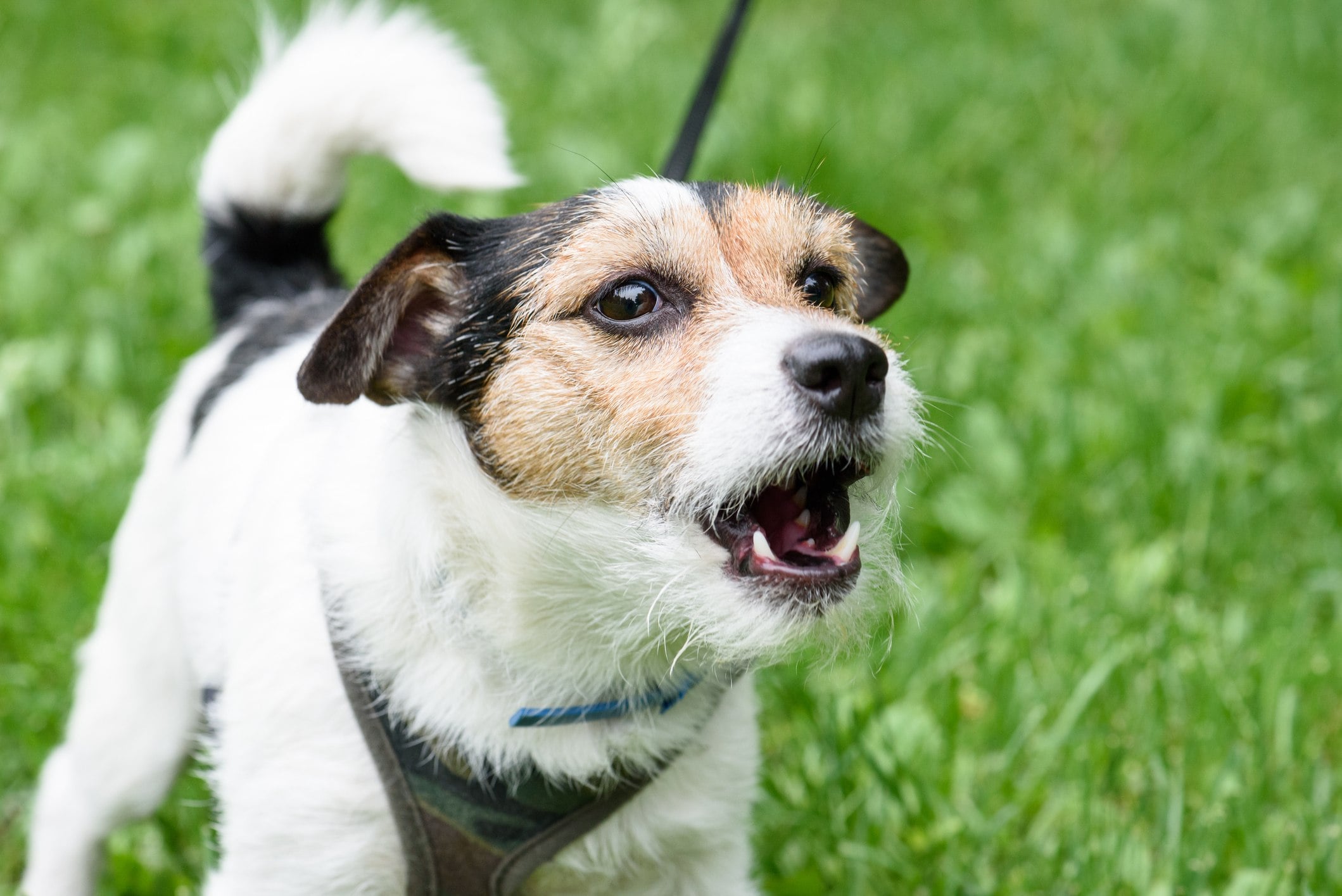
Dog barking with tail curled | alexei_tm/iStock/Getty Images
Because some dogs' tails naturally curl or bend toward the head, this tail position could mean he's relaxed, according to Reader's Digest. But if your dog is holding or pulling it toward his head it could mean he's overstimulated, on high alert, or very excited. In a situation like this, it's key to watch the rest of the dog's body language to decipher what it means, because the spectrum ranges from alarmed to joyful.
Next: For these dogs, check out the tail's base.
4. What about stubby tails?
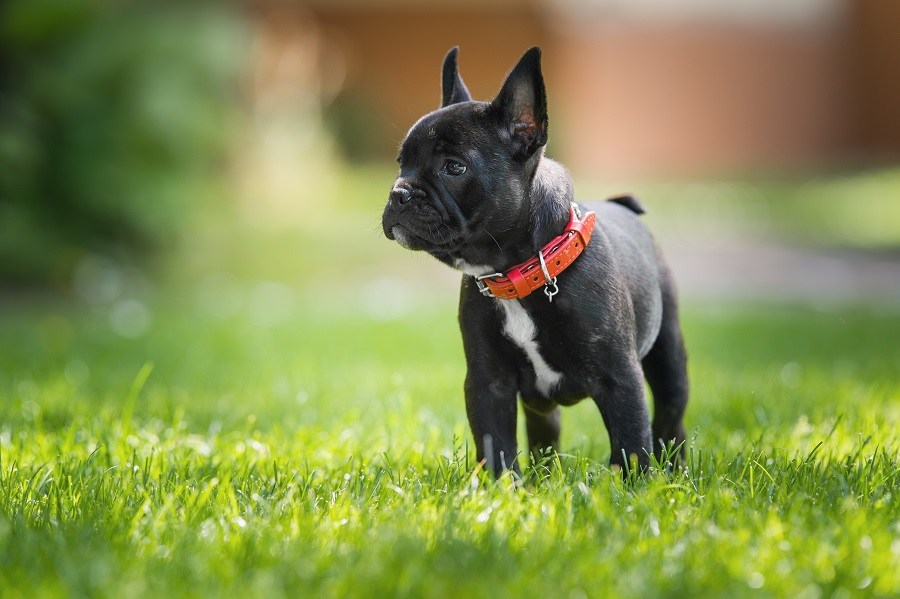
French bulldog puppy | Fotokostic/iStock/Getty Images
How can you understand what breeds with stubby or curly tails are trying to tell you? According to Reader's Digest, the stubby tails mimic the same signals as the straight and long tails — it's just a little harder to understand what they're communicating.
"A key component to reading tails that are stubby or curly is to look at the base of the tail. Since the tail is attached to the spine, any movement of the tail starts at the base, so if you look at the base of the tail, you can see when a stubby tail is raised straight up, in the air, or tucked down over the butt, etc," said Askeland
Next: Go to the vet immediately if you see this.
5. Limp
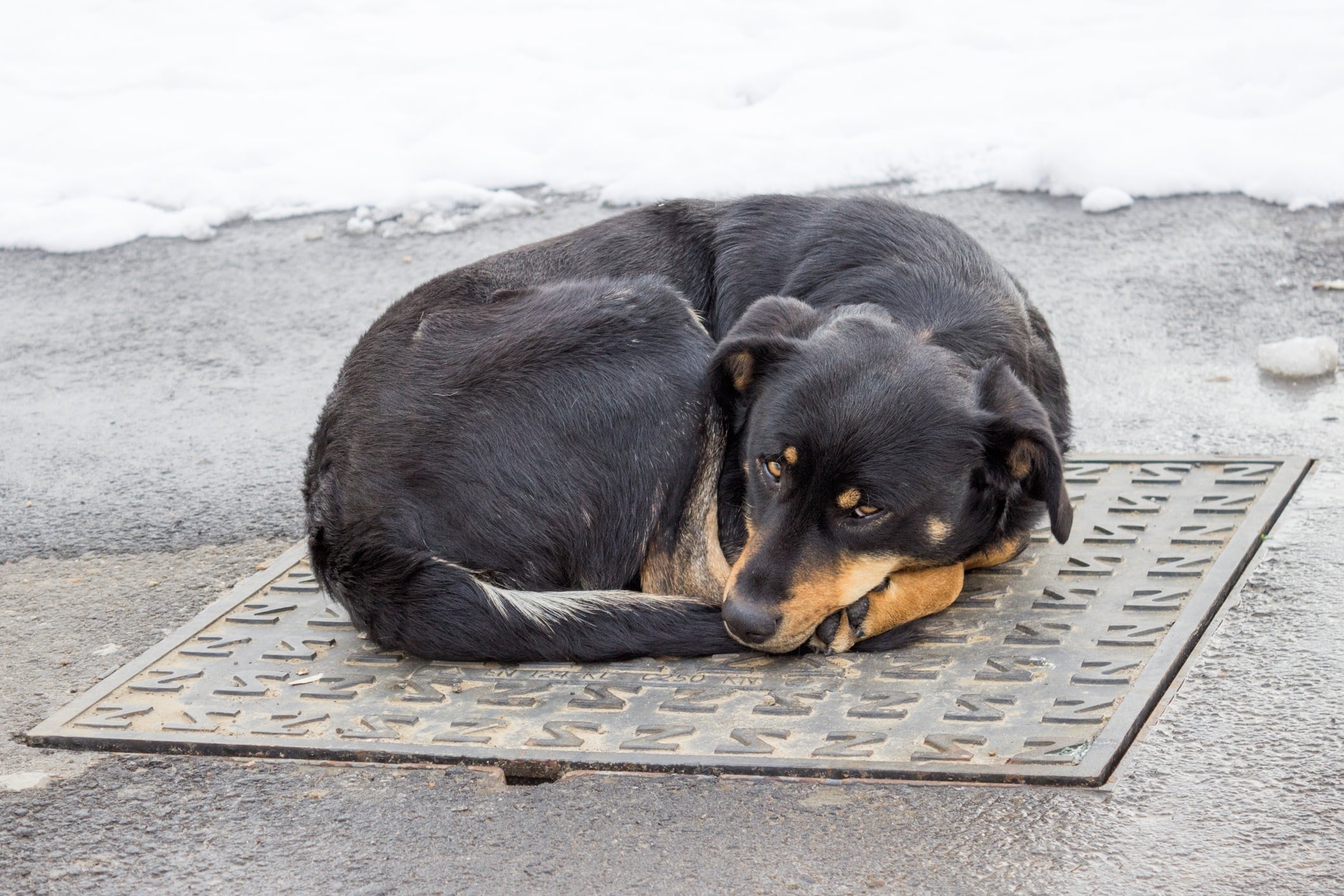
Dog curled up | eyjafjallajokull/IStock/Getty Images
It's important to remember that your dog's tail is an extension of its backbone and a sensitive part of his anatomy that can easily be injured, according to Reader's Digest.
"A limp tail, one that cannot wag, is a problem and can mean a dog has an injury directly to the tail or to other connected areas. A tail can be sprained, broken, dislocated, or have nerve damage that causes it to go limp," said Askeland. Seek immediate veterinary care if your dog's tail is limp.
Next: Your dog likely isn't comfortable if he does this.
6. Pulled down
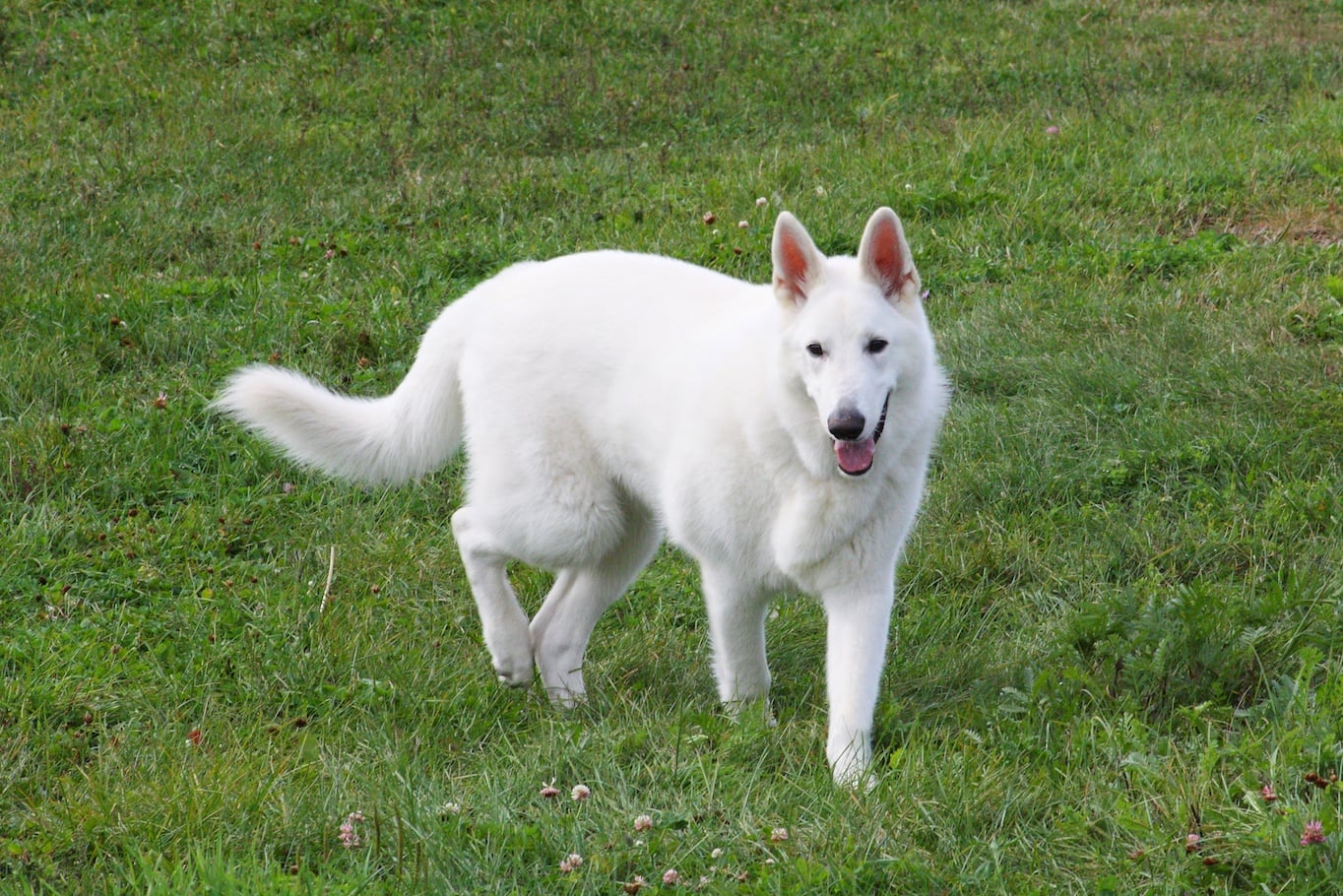
White German Shepherd | Nicholas Chase/IStock/Getty Images
If your dog is holding his tail at a low level — covering his dog's anus but not yet disappearing between his legs — he could be feeling nervous, according to Reader's Digest.
"A tail that is pulled down shows a dog is not entirely comfortable with the situation he's in and could be feeling anxious, nervous, or unsure," said Askeland. "A tail wag or wiggle may also be included as a sign of appeasement."
Next: The best kind of wag.
7. Right-hand wag
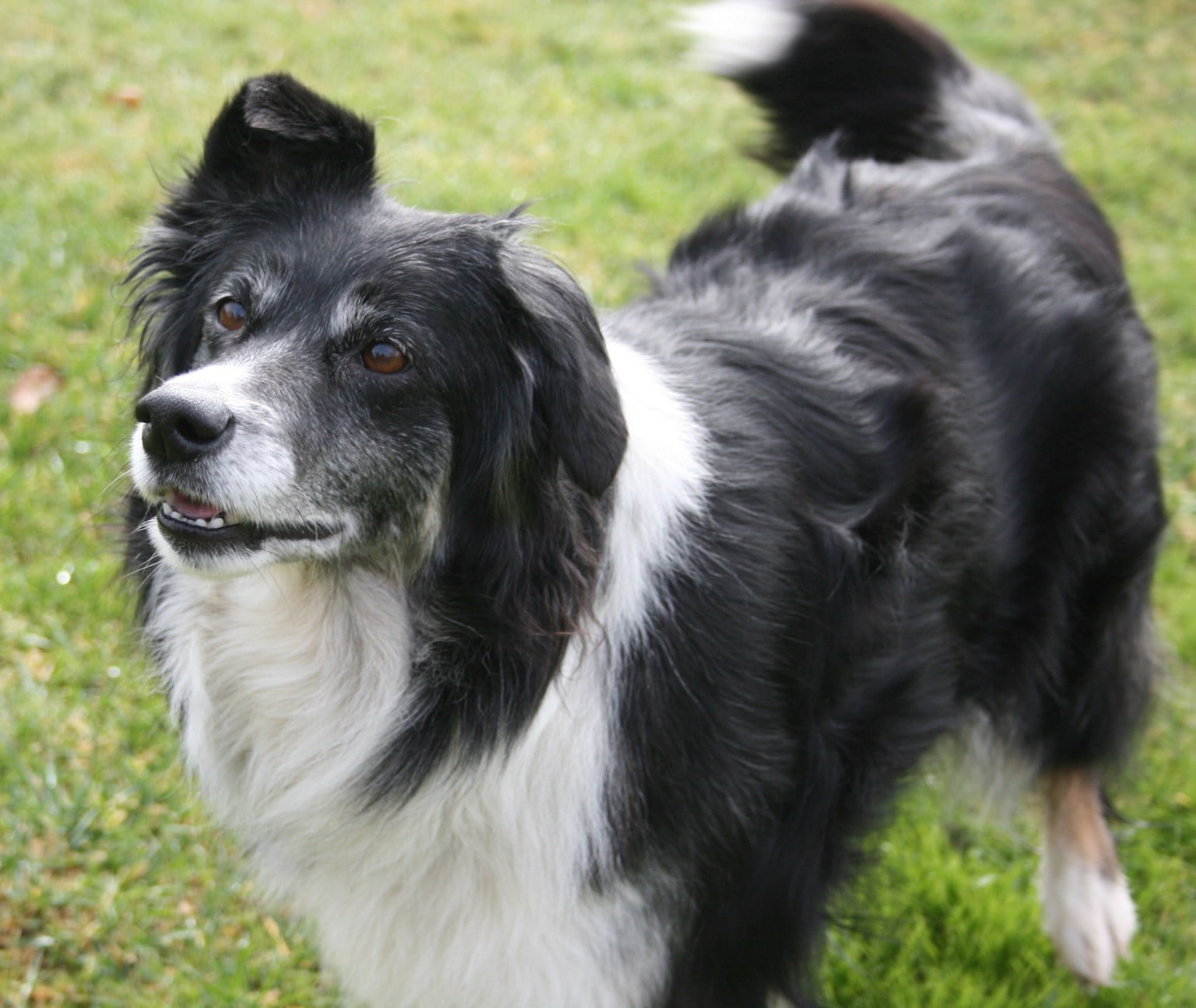
Black and white border collie | Frugoe/IStock/Getty Images
According to Reader's Digest, a dog wagging his tail to the right will most likely be friendly.
"There is research that suggests that when a dog wags its tail on the right side, it's considered more likely to be friendly than when a dog wags its tail on the left side of its body," said Russ Hartstein, CEO of Fun Paw Care, certified dog behaviorist and trainer in Los Angeles. If your dog is wagging his tail to the left, it's likely he's facing a situation in which he's not entirely comfortable, such as a dominant dog with an unfriendly stance.
Next: You might want to back away from this.
8. High and stiff
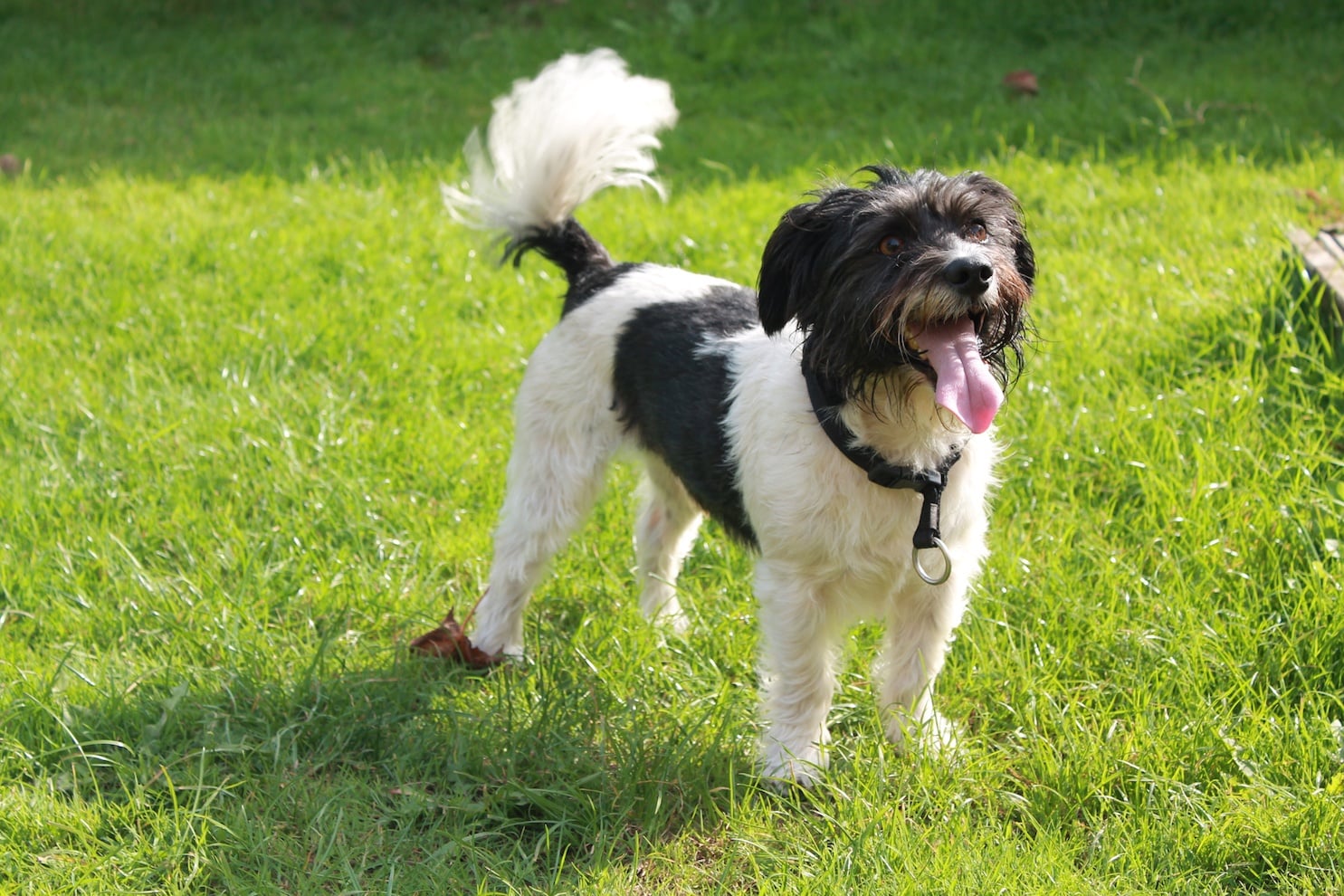
Small Terrier with tail in the air | Upyanose/IStock/Getty Images
If your pup is holding his tail high and stiff and the tip is wagging quickly, it usually means he's alert, confident, and strutting his stuff, according to Reader's Digest. But if his tail is high and stiff around other dogs, he could be displaying his dominance. And if his tail is high and stiff and he's showing any teeth, open mouth, raised hackles, and a wrinkled nose, it's definitely a cue to back off.
Next: Proceed with caution.
9. Slow wag
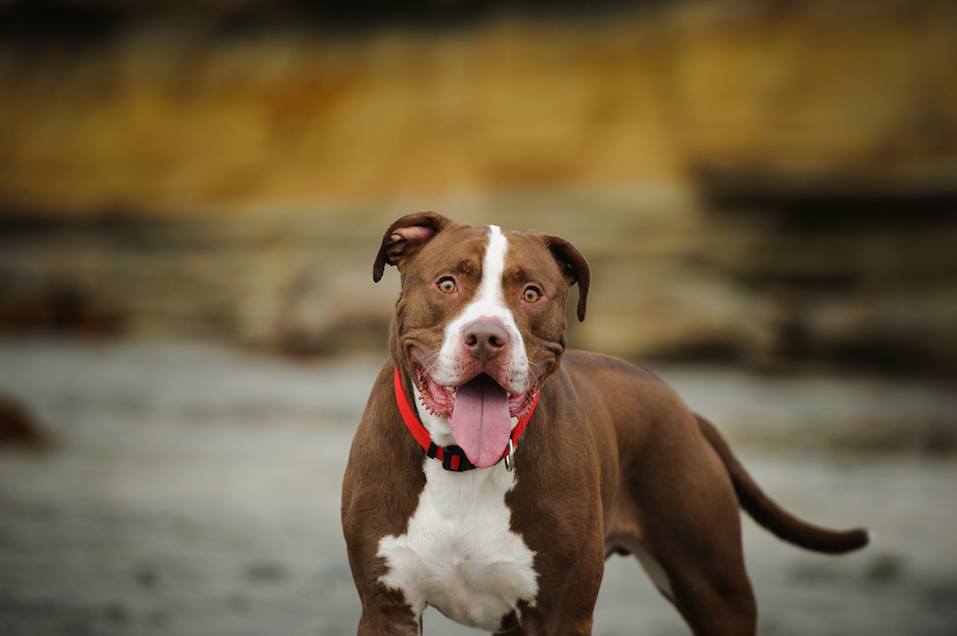
American Pit Bull Terrier | horsesdogscats/Getty Images
If your dog is wagging her tail slowly, she might just be contemplating her next move, according to Reader's Digest. But it could also be an indication that your dog isn't feeling friendly, so you should remind strangers to proceed with caution.
"Make sure to take the entire environment and personality of the dog into consideration. If it was an unknown dog, do not interact," said Hartstein.
Next: Beware of dog.
10. Rapid and shaky
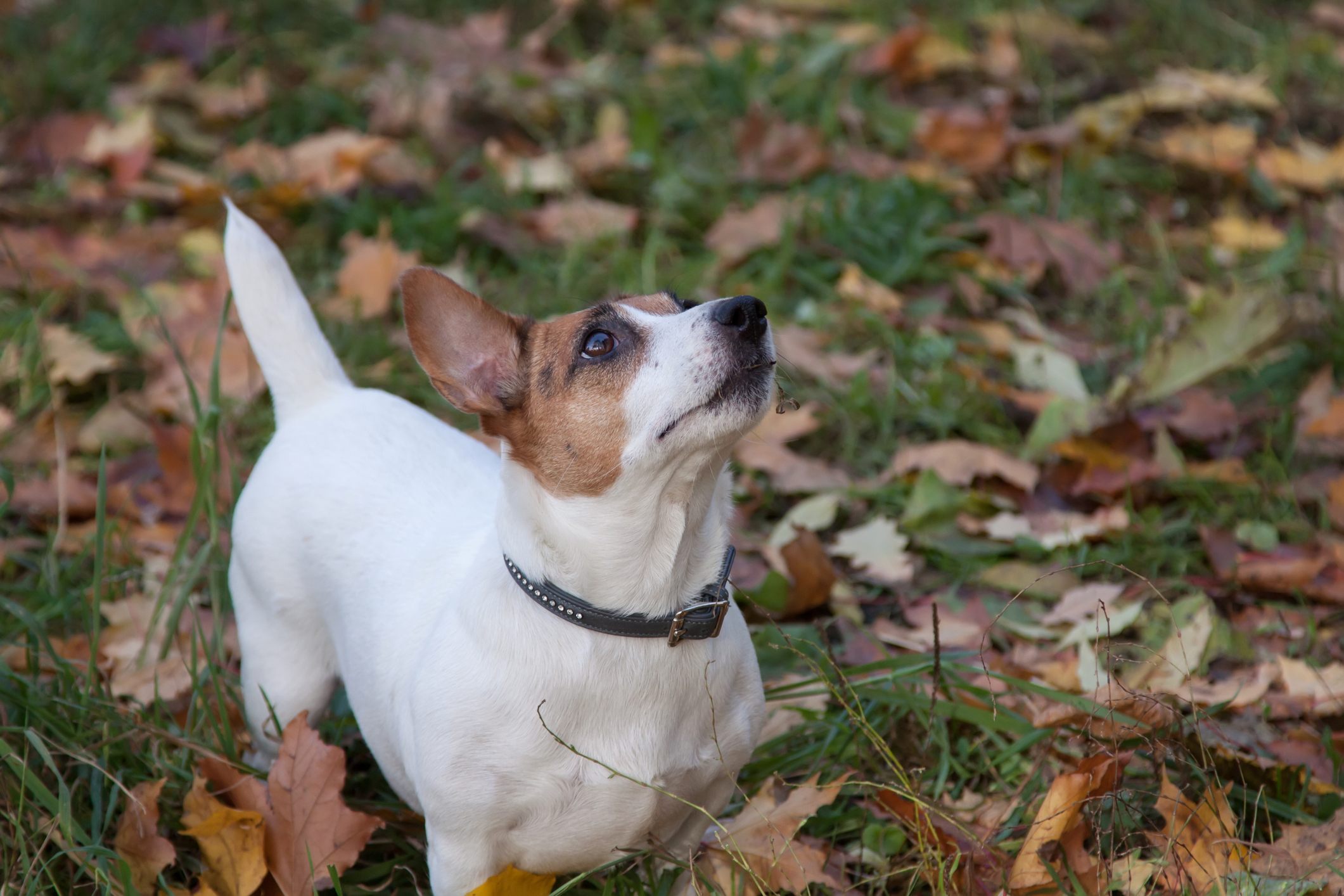
Jack Russel Terrier | Edoma/IStock/Getty Images
Tension and hostility can cause your dog to wag his tail in a fast, vigorous manner, according to Reader's Digest. And, if your dog is wagging his tail this way, he might spring into action at any moment, so be careful around strangers. "This is a highly aroused dog and should generally be avoided until it settles down," said Hartstein.
Next: Welcome home.
11. Full body
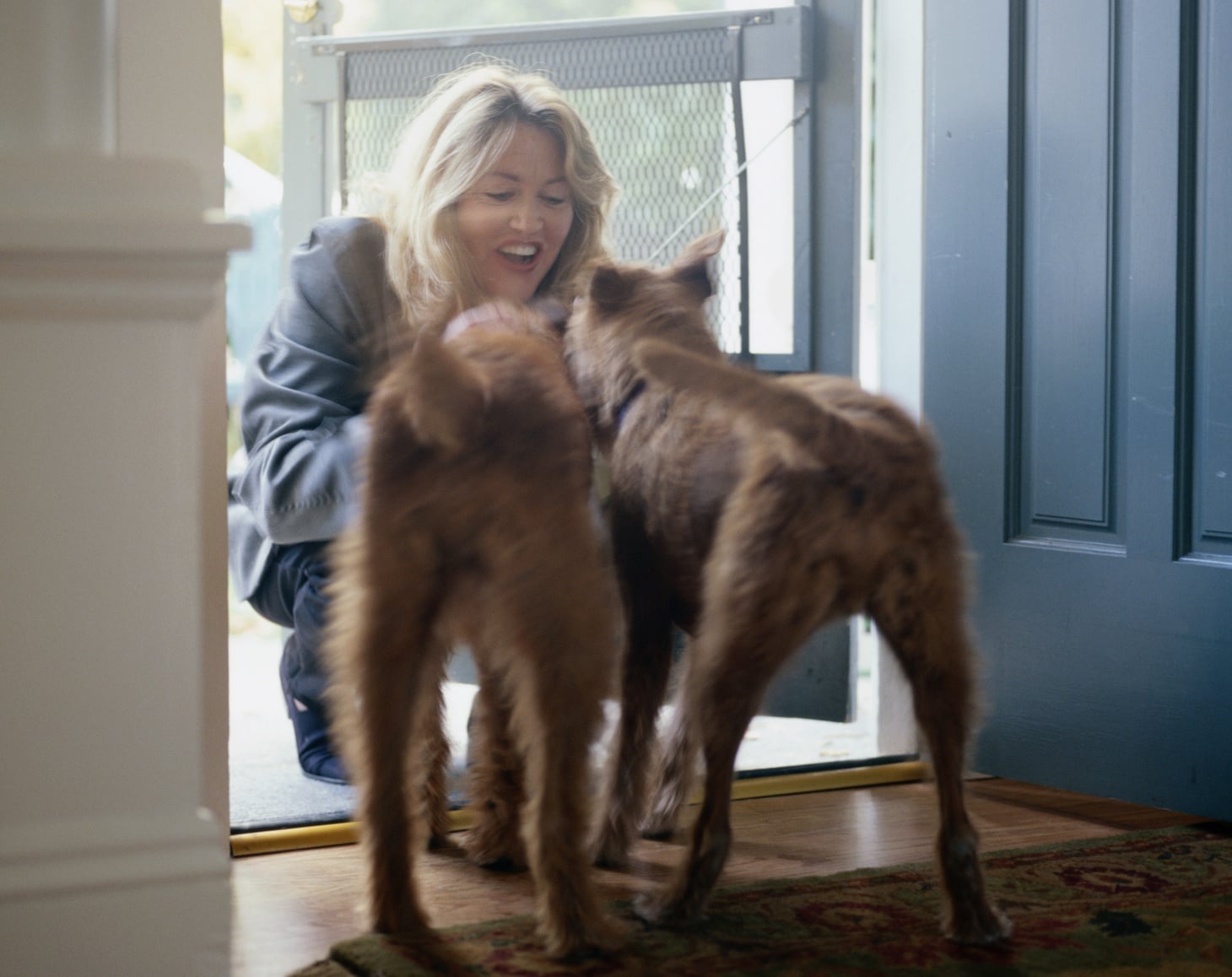
Woman Greeting Irish Terriers at Front Door | Ryan McVay/iStock/Getty Images
Your dog likely does a full body tail shake when you get home from work. He will also probably be shaking his body loosely and be wearing a submissive grin, according to Reader's Digest. "The more swaying and wiggly motion closer to the head of the dog, the friendlier the dog is," said Hartstein.
Next: Dog speak
12. Dogs understand tail messages
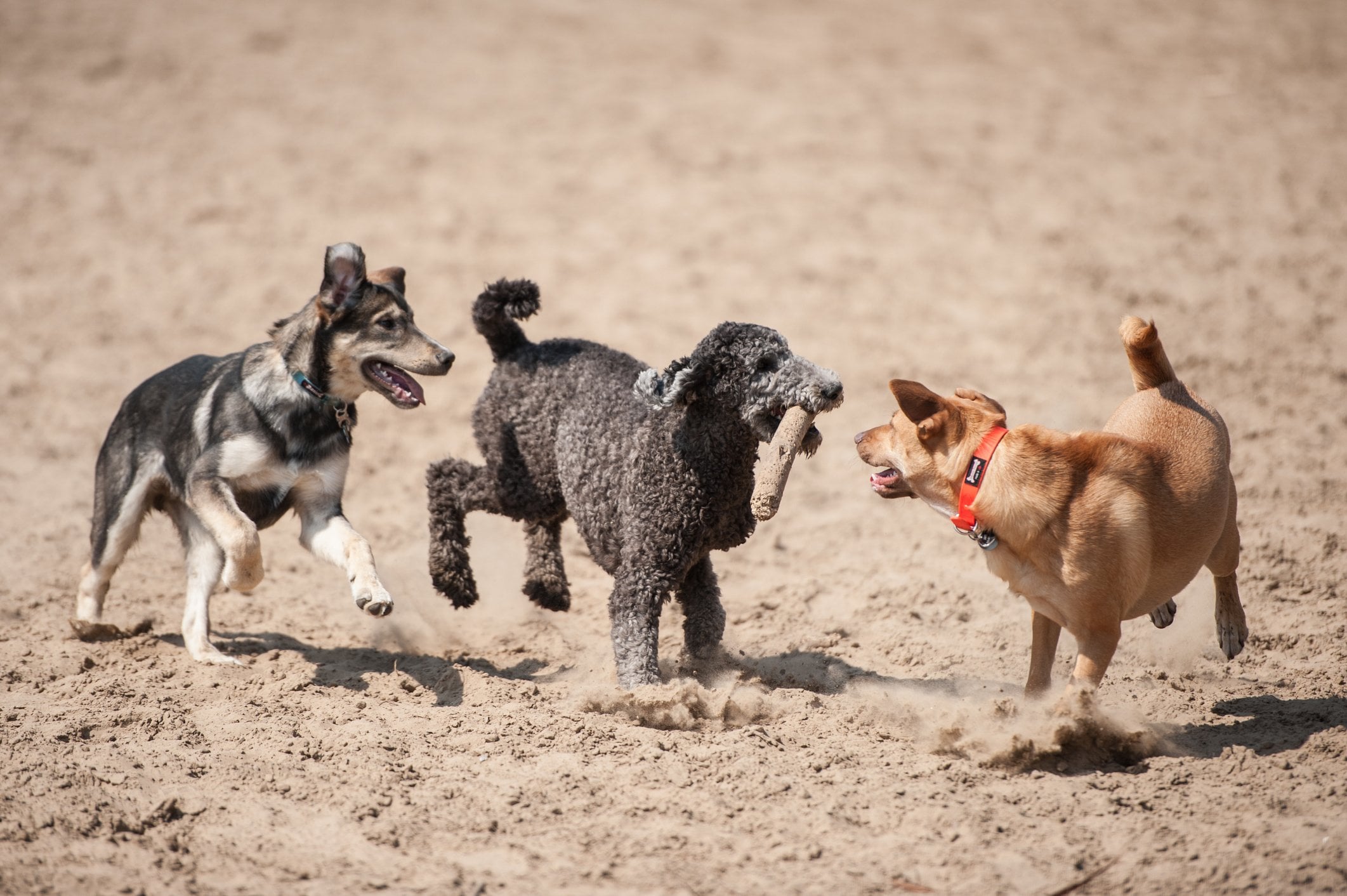
Three dogs running at dog park with a stick outside in the dirt. | studio-laska/iStock/Getty Images
Even if humans don't always get it, dogs totally understand other dogs' tail signals, according to Readers Digest. The tail movements are often slight and difficult for people to perceive, but dogs get it right way. Funny how that works — we might not hear a butt conversation, but canines sure do.
Next: Height is important.
13. A dog's tail height tells a story
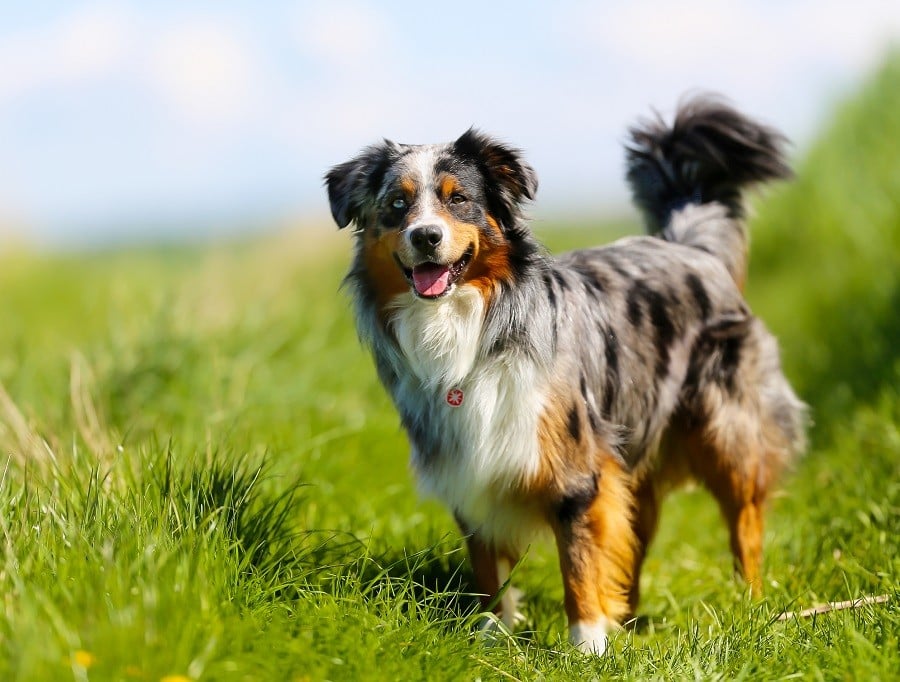
Australian-shepherd | Bigandt_Photography/iStock/Getty Images
According to petMD, generally speaking, if your dog is holding her tail high and wagging it she's signaling enthusiasm. And your dog's tail height can also say a lot about her level of confidence.
The higher the tail, the more confident the dog — the lower the tail, the more nervous or timid the dog. That said, if your dog is holding her tail high over her back, remember to proceed with caution.
Next: Speed also matters.
14. The wagging speed also tells story
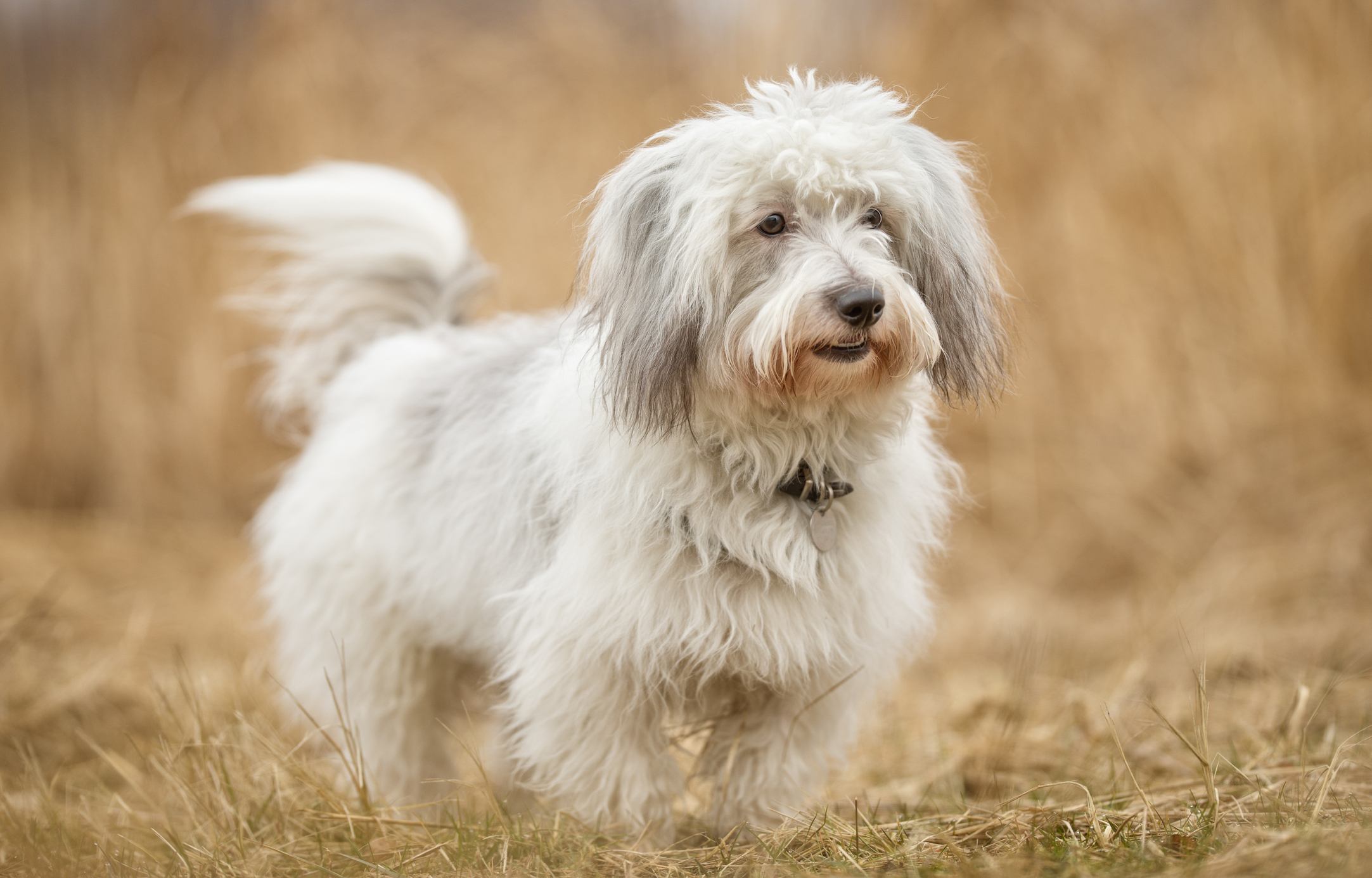
Coton de Tulear dog | Bigandt_Photography/iStock/Getty Images
According to petMD, the speed at which he wags his tail is a good indicator of how your dog is feeling. Typically, a fast wag is a good sign that he's friendly and wants to interact, but a slow wag — as you now know — can mean he's not friendly. A good rule of thumb is, the closer to the front of the body the back-and-forth tail rocking starts, the friendlier the dog will be.
Next: Every dog is different.
15. Keep in mind these are just guidelines
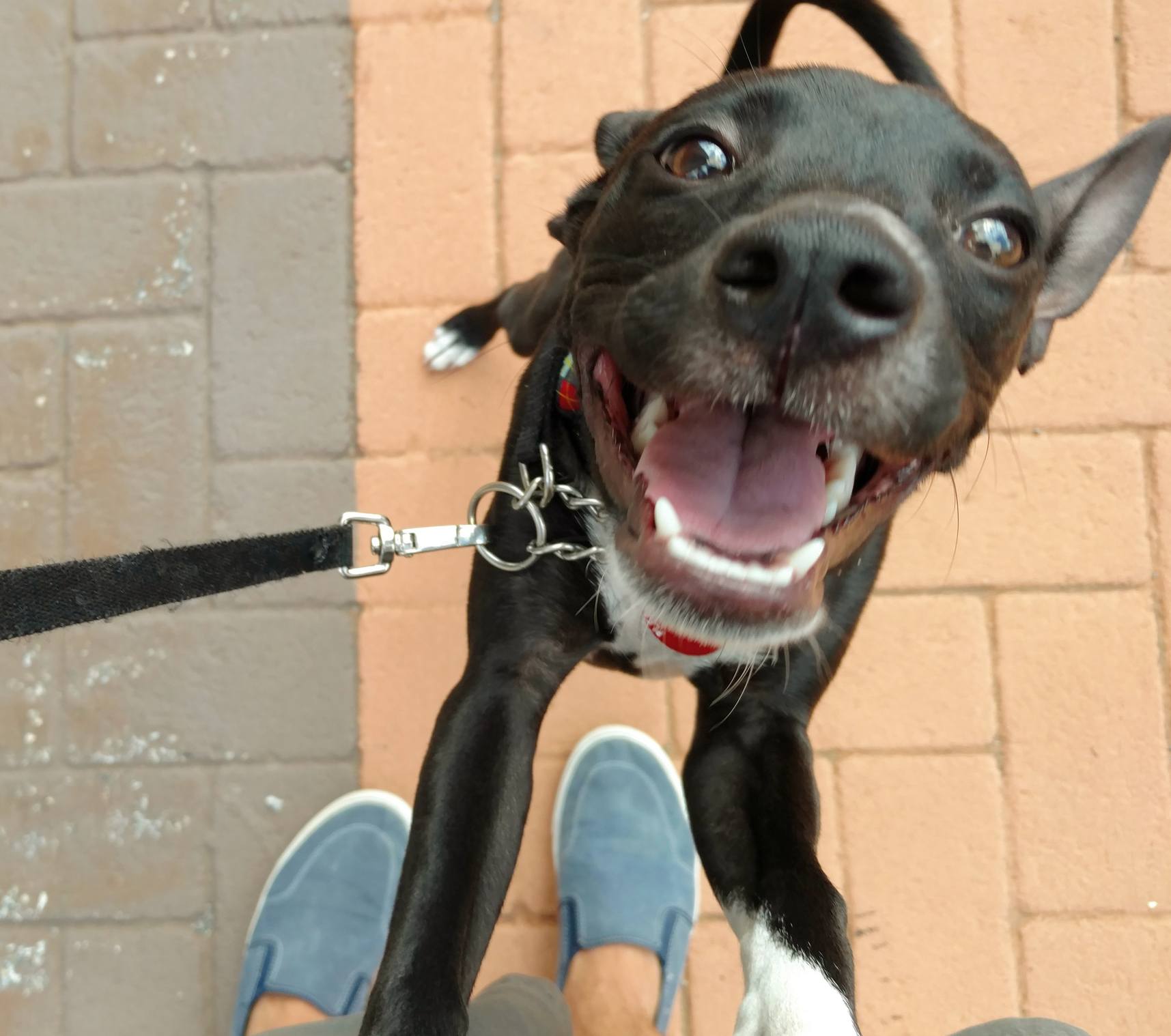
Happy dog standing | Citysqwirl/iStock/Getty Images
Tail wags can have different meanings depending on the situation, and you should always look at the other signals that a dog is giving before you approach, according to petMD. Also, don't forget that dogs' tail wagging can take on different meanings can.
"It [wagging] is a pretty universal behavior. What isn't universal is temperament between and within breeds," said Dr. Linda Radosta, owner of Florida Veterinary Behavior Service. "One individual dog may wag his tail a little lower or a little higher or a little faster than another individual. It is important for owners to get to know their dog's body language."
Read more: Surprising Ways You Might Be Killing Your Dog
Check out The Cheat Sheet on Facebook!
Source: https://www.cheatsheet.com/culture/secrets-your-dog-is-trying-to-tell-you-with-his-tail.html/
0 Response to "Dog Sometimes Walks Funny With His Tail to the Side"
Postar um comentário